
Immerse yourself in a world of top-notch institutions and endless opportunities in Denmark. Home to some of the world's most prestigious universities, the Denmark offers a rich academic tradition combined with modern innovation.
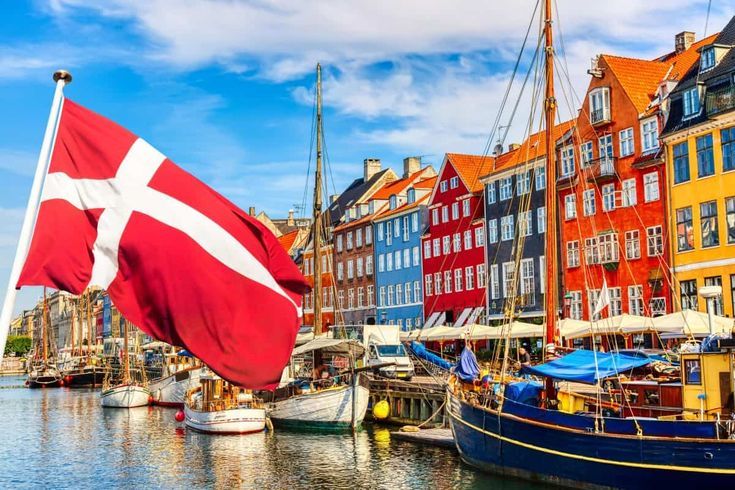
Study in Denmark — a land of innovation and creativity. Experience world-class education, practical learning, and global opportunities in a student-friendly environment.
Denmark is a hub of innovation, creativity, and high-quality education. Studying here provides international students with not only world-class academic programs but also a safe, inclusive, and student-friendly environment. Danish universities focus on practical learning, critical thinking, and research-driven education, preparing students for global careers.
🌟Key Reasons to Study in Denmark:
1. World-Class Education: Denmark is home to top-ranked universities offering internationally recognized degrees.
2. Innovative Learning: Emphasis on creativity, problem-solving, and real-world applications.
3. Student-Friendly Environment: Safe, welcoming, and multicultural campuses with excellent support for international students.
4. Global Career Opportunities: Programs are designed to equip students with skills sought after worldwide.
5. Practical Experience: Opportunities for internships, research projects, and collaboration with industry.
6. High Quality of Life: A sustainable, progressive country with a focus on well-being and social balance.
✔️ February
✔️September
1. Educational Requirements: Applicants must have completed the Higher Secondary School Certificate (HSC) or an equivalent qualification (e.g., A-Levels, IB Diploma) with a minimum score of 60–70%, depending on the program. All academic certificates must be attested by the Inter Board Coordination Commission (IBCC), the Ministry of Foreign Affairs (MOFA), and the Danish Embassy.
2. English Language Proficiency: Applicants are required to demonstrate proficiency in English by completing one of the following tests. For IELTS, an overall score of 6.0–6.5 is needed for undergraduate programs, while postgraduate programs require a score of 6.5–7.0. Alternatively, for the TOEFL iBT, applicants must achieve a score of 80–90 for undergraduate programs or 90–100 for postgraduate programs. (Exemptions may apply for students from English-medium institutions.)
3. Statement of Purpose (SOP): Submit a well-crafted SOP outlining your academic goals, reasons for choosing Denmark, and how the selected program aligns with your career aspirations.
4. Recommendation Letters: Undergraduate applicants are required to provide two academic references from their teachers. Postgraduate applicants must submit one academic reference and, if applicable, one professional reference.
5. Curriculum Vitae (CV): Submit a current CV or resume that highlights your academic achievements, extracurricular activities, and any relevant work experience. Postgraduate applicants should place particular emphasis on research experience or industry-related accomplishments.
6. Proof of Financial Means: Provide bank statements demonstrating sufficient funds to cover living expenses (approximately €900–€1,200 per month) and tuition fees (if applicable). All financial documents must be attested by the Danish Embassy.
7. Health Insurance: Submit proof of valid health insurance coverage in Denmark. EU students can provide their European Health Insurance Card (EHIC) as proof.
1. Valid Passport: Ensure your passport is valid for at least six months beyond your intended stay and contains a minimum of two blank pages for visa stamps.
2. Admission Letter: Provide an official acceptance letter from a recognized Danish university or higher education institution.
3. Proof of Financial Means: Submit bank statements demonstrating sufficient funds (€900–€1,200 per month) to cover living expenses for 6–12 months upfront. If applicable, include proof of tuition fee payment. All financial documents must be attested and translated into English or Danish.
4. Academic Documents: Present attested copies of your Higher Secondary Certificate (HSC) or previous academic degrees. The attestation process requires verification by the IBCC, followed by the Ministry of Foreign Affairs (MOFA), and finally the Danish Embassy.
5. Health Insurance: Obtain valid health insurance coverage for your entire stay in Denmark. (EU students can use their EHIC card.)
6. Accommodation Proof: Provide evidence of housing, such as a rental agreement, dormitory confirmation, or a university-issued housing guarantee.
7. Passport-Sized Photos: Submit two recent passport-sized photos (35x45 mm) with a white background.
8. Visa Fee Payment Receipt: For non-EU students, the visa fee ranges from €255 to €340 (approximately 80,000–110,000 PKR). Include the payment receipt with your application.
9. Statement of Purpose (SOP): Write a compelling statement outlining your academic goals and reasons for choosing Denmark as your study destination.
10. Biometric Data: Submit biometric information, including fingerprints and a photograph, at the visa application center.
Contact us today for personalized guidance on university selection, application process, and visa requirements for studying in the Denmark.
Get Free Assessment